
How a Project Team Checks That a BIM Model Follows the Agreed Standard
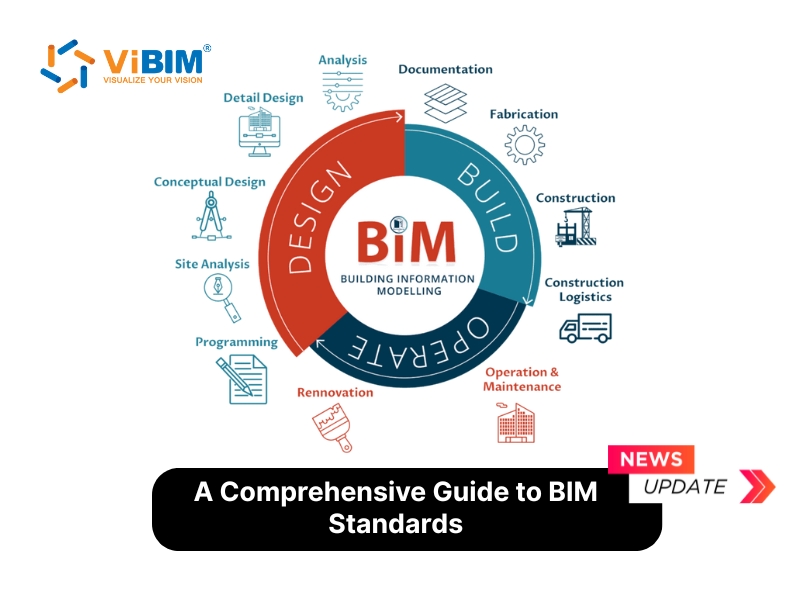
Every BIM project reaches a moment when someone asks whether the model can be trusted. The answer rarely comes from the software. It comes from a short list of agreements made before modeling began, and from a routine that confirms the delivered model still honors them.
The routine starts with the information requirements. A team using the ISO 19650 framework first states what information the owner needs, who produces it, and when it is exchanged. That statement is the yardstick. Without it, a reviewer can only say a model looks fine, which is an opinion and not a check.
The second step is the shared environment. Standards in this field describe a common data environment (CDE) where every stakeholder reads and writes information under the same rules. A reviewer opens the CDE and confirms that files carry the agreed naming convention, that each one sits in the right state, and that nobody keeps a private copy of a model on a laptop. UK practice grew from BS 1192 and the PAS 1192 series, and those documents made this discipline routine long before ISO 19650 appeared.
Third comes the level of detail. In the United States, the BIMForum Level of Development specification scales from LOD 100 for conceptual content to LOD 500 for as-built content. The reviewer picks a few elements, such as a wall, a duct run and a column, and asks whether each carries the detail promised for the project stage. For renovation work there is one more question: how accurately was the element positioned? That is the job of the USIBD Level of Accuracy specification, which measures how closely geometry matches the captured data.
Existing buildings add a practical complication. When the model describes a structure that is already standing, the reference is the real site, not a drawing. Teams that order ACC BIM workflows often pair them with scan data so the check can be run against measured reality. This is where the written rules and the physical building meet.
The last step is the exchange format. If the project requires open formats, the reviewer exports an Industry Foundation Classes (IFC) file and opens it in a different application. Missing elements or scrambled data show up immediately. A model that survives this test has proved its interoperability.
Keep the findings in a short log: the requirement, the sample checked, the result and the person who confirmed it. For a deeper look at the frameworks behind these steps, the guide on BIM standards covers the international series, the national rules and the difference between a standard and a project protocol. A standard says what good looks like. The protocol says how this project will prove it.
A repeatable check turns the standard from a document on a shelf into a habit the whole team shares. Teams that run it at each milestone catch drift while it is still cheap to fix, and owners receive a model they can hand to facility managers without translation.