
How We Verified a Dense Factory Model Before Handover
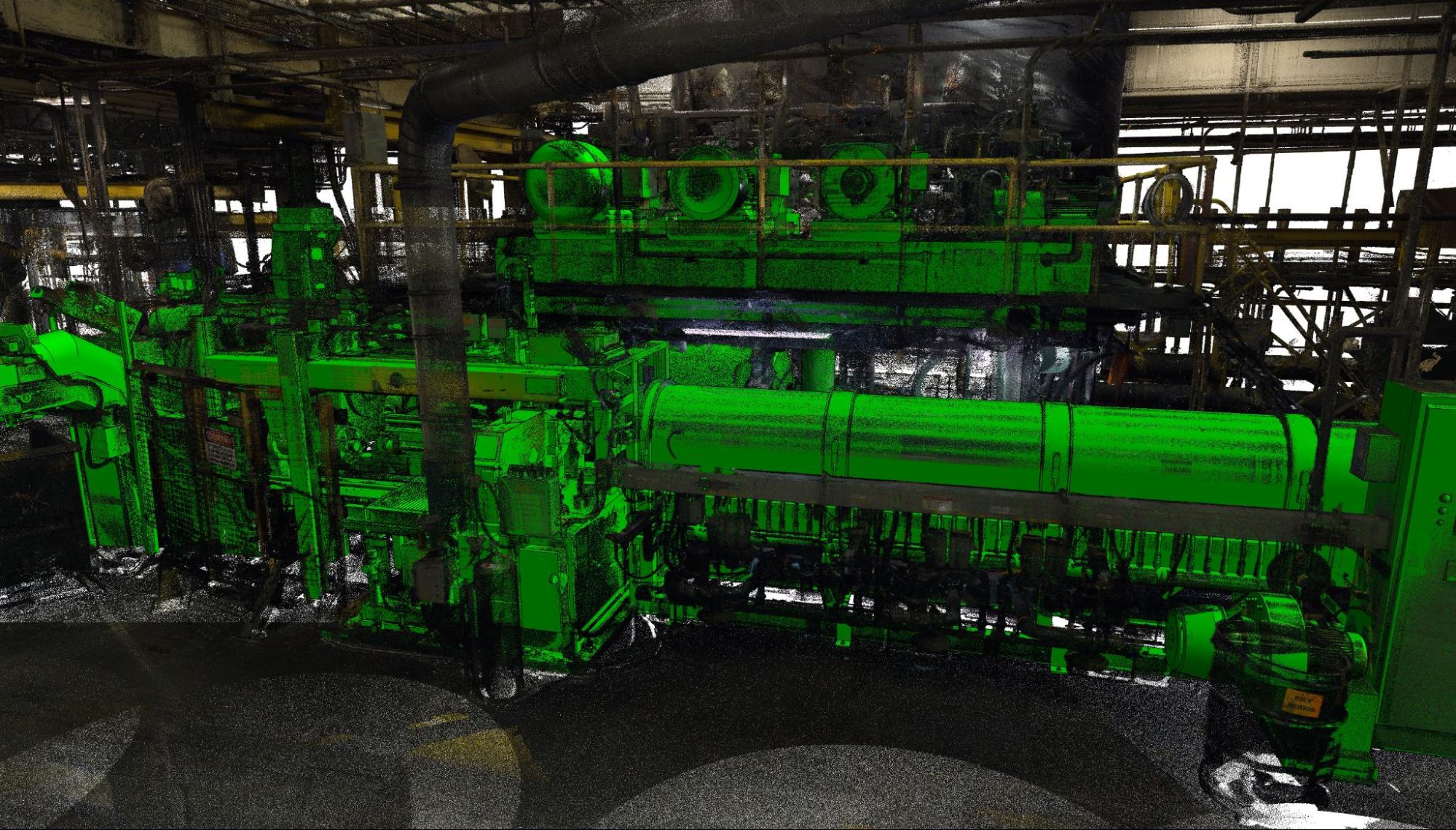
The hardest part of a factory model is rarely the building. It is proving, before the file leaves the office, that hundreds of small machine parts are where the scan says they are. This note follows that verification story on a single-floor industrial plant in the United States, Project 758.US, which covers 1,500 m².
The client wanted architecture, structure and MEP in one coordinated Revit model, at LOD 400, built from a point cloud and reference images. Teams that deliver this kind of discipline-by-discipline work often rely on structural BIM modeling services to keep the framing and equipment supports consistent with the rest of the model, and that mattered here because the machinery sat on racks the team had to read from imperfect scan data.
The scan was weakest exactly where the machinery was densest. An aluminum extrusion press stood in the middle of the scope, with electrical conduits and flexible pipes wound around it. Because the data could not settle every doubt, the team added checks in layers instead of trusting one pass.
First came section checks, which compare cut views of the model against the point cloud. Next came Navisworks checks, used to look for clashes and misplaced objects across disciplines. The third layer was a proprietary point cloud analysis solution that measures the model against the scan. Each layer catches a different kind of mistake, so the combination is stronger than any single step.
Modeling choices supported the checking. The press and conveyor were not built as a single family. A one-family approach made large, slow files that were hard to inspect. Splitting the unit into a pulling motor, a conveyor belt and a stamping machine block let reviewers check each part on its own.
When the model reached the client, their review produced a list of points to correct. The team fixed all of them and then ran the point cloud analysis once more as a last gate before handover. That second run is the step that turns a reviewed model into a trusted one.
The full write-up of the job is on the project page for Revit modeling for factory in the US, including the scope, the challenges and the business impact.
If you are planning a similar plant, the practical advice is short: define which machines matter, divide them into blocks you can inspect, and plan more than one verification pass.